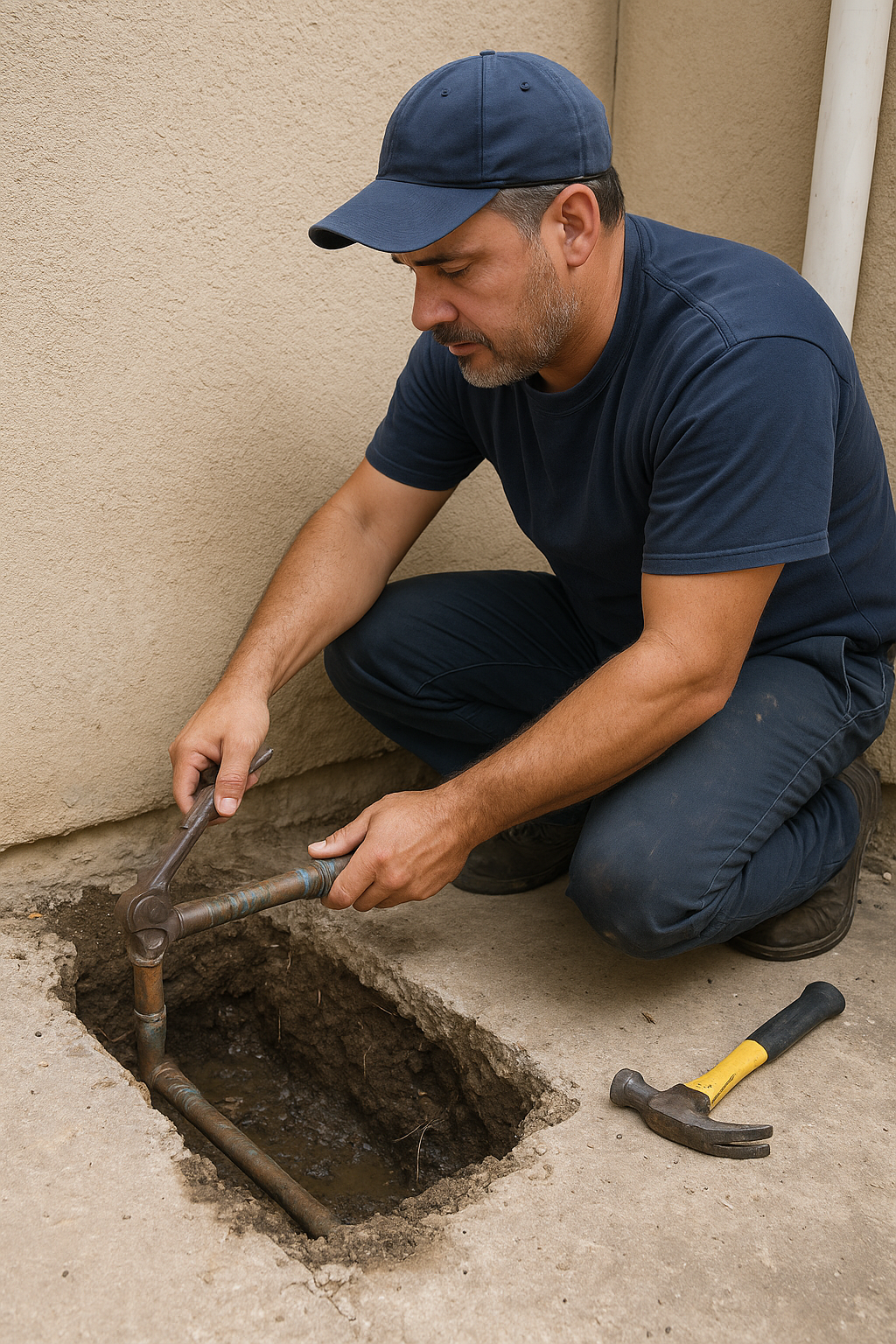
Houston's subtropical climate brings frequent heavy rains that saturate the clay-heavy soils common across Harris County, causing slabs in neighborhoods like the Heights and Montrose to shift and stress older copper or galvanized lines. Homes built before the 1980s in these areas often have shallow plumbing runs that crack when soil expands and contracts with humidity swings. Experienced crews start with acoustic and thermal imaging to locate leaks without tearing up entire floors, then isolate sections using access points under carpet or tile rather than random demolition.
Downtown and Midtown high-rises and townhomes present different challenges where vertical stacks feed multiple units and leaks can travel between floors before surfacing. In River Oaks and nearby estates, mature landscaping and tight lot lines limit equipment access, so repairs frequently involve rerouting lines through exterior walls or garages instead of direct excavation. Pearland and Sugar Land properties on similar clay soils see the same movement issues but with newer PEX installations that still fail at joints when foundations settle unevenly after summer storms.
Katy homes on the western edge often sit on slightly sandier soils yet still experience slab leaks from the same pressure surges that occur when temperatures spike and residents increase water use. Crews here carry extra fittings for both legacy copper and modern materials because mixing sections during partial repairs leads to future corrosion. Every job ends with a pressure test and moisture meter check along the slab perimeter to confirm the fix before any flooring is replaced.
Technician insight
In Houston the thing that catches most people out with slab leak repair is assuming a single wet spot means the leak is directly below it. Our clay soils in Harris County move enough after a week of rain that water travels laterally under the slab, so what looks like a Montrose kitchen leak often originates two rooms away in an older copper run stressed by foundation shift.
Heights Bungalow Leak
A 1960s bungalow in the Heights showed damp carpet near the back bedroom after heavy spring rains. Acoustic scanning revealed the leak had traveled from a main line under the dining room where soil expansion had stressed a copper elbow. We isolated the section, rerouted through the crawl space edge, and pressure-tested the new run before restoring floors.
Slab Leak Repair Services We Offer
✓Electronic Leak Detection
Uses acoustic sensors and thermal cameras to pinpoint leaks under slabs in Montrose and Heights homes without unnecessary demolition.
✓Pipe Rerouting
Reroutes leaking lines through walls or attics in River Oaks and Midtown properties where direct slab access is blocked by landscaping or tight lots.
✓Foundation Moisture Assessment
Measures soil moisture and slab movement around older homes in the Heights and Downtown to determine if leaks are driving foundation stress.
✓Emergency Slab Leak Response
Provides same-day isolation and temporary bypasses for active leaks affecting multiple units in Midtown or high-rises near Minute Maid Park.
✓Slab Leak Repair in Historic Homes
Handles delicate plumbing in pre-1950s properties in Montrose and River Oaks using minimal excavation to preserve original flooring and structure.
Slab Leak Repair Cost in Texas
| Service | Typical Range | What Affects It |
|---|---|---|
| Electronic Detection Only | $250–$450 | Higher in multi-story Midtown or Downtown buildings with complex layouts |
| Standard Slab Leak Repair | $1,200–$2,800 | Varies with depth of line and proximity to clay soil movement zones in the Heights |
| Pipe Rerouting | $1,800–$3,500 | Common when direct excavation is blocked by mature landscaping in River Oaks |
| Emergency Isolation | $400–$700 | Includes temporary bypass for active leaks near high-traffic areas like Montrose |
Ranges are typical for Texas and confirmed with an exact written quote before any work starts.
How it works
- 1
Site Evaluation
Technician inspects the property layout, reviews water bills, and checks visible moisture patterns in neighborhoods like the Heights or Montrose.
- 2
Leak Location
Deploys electronic listening devices and infrared cameras to trace the leak path under the slab while noting soil conditions typical of Harris County clay.
- 3
Access and Isolation
Creates targeted floor or wall access points, shuts off affected sections, and confirms the leak with a pressure test before permanent repairs begin.
- 4
Repair and Verification
Replaces or reroutes the damaged line, restores access points, and performs a final pressure and moisture check across the slab.
Pricing
Costs depend on access difficulty, pipe material, and whether rerouting is required in older Houston housing stock.