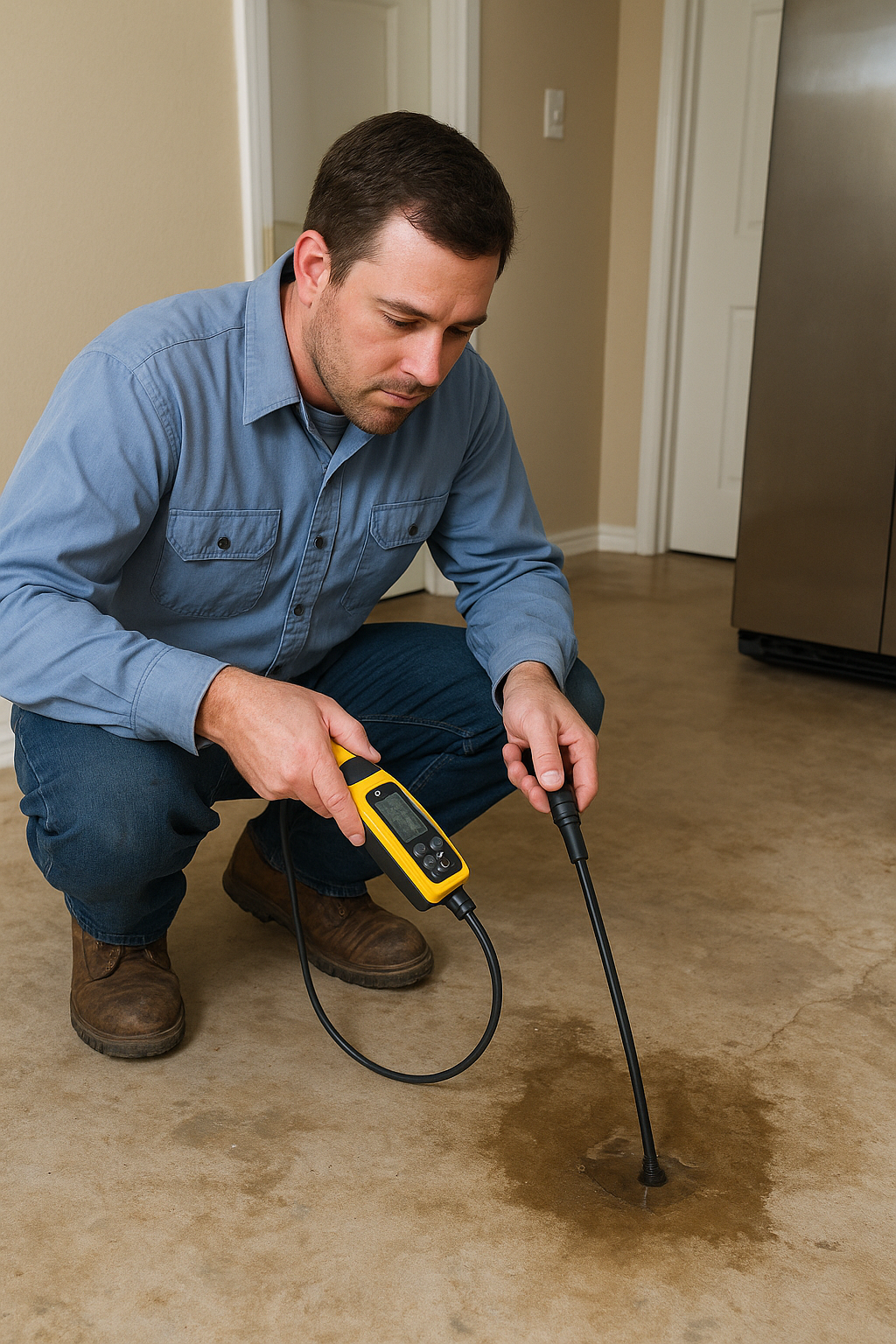
Houston’s slab homes in neighborhoods like the Heights and Montrose often sit on expansive clay soils that swell and shrink with the area’s frequent rain and humidity swings. This movement stresses copper and PEX lines embedded in slabs, creating pinhole leaks that go unnoticed until moisture reaches the surface or affects nearby foundations. Detection crews must account for these soil dynamics plus the mild winters that keep pipes under constant pressure without the freeze-thaw cycles common farther north.
Electronic leak detection and acoustic listening remain the primary tools because they locate leaks without unnecessary concrete removal. In River Oaks and Midtown properties built before 1980, crews also use video camera inspection through existing cleanouts to trace line routes that often deviate from original plans. Thermal imaging helps on humid summer days when surface temperature differences are harder to read, while pressure testing confirms isolated sections before any exploratory cuts.
Downtown high-rises and nearby commercial buildings add another layer: access is limited to service corridors and leaks can travel along post-tension cables. Technicians test one zone at a time, logging flow rates and listening for the distinct hiss that clay-bedded lines produce when water escapes under pressure. This methodical approach prevents unnecessary disruption in dense urban settings where even small excavations affect parking and pedestrian traffic.
Homeowners in Katy, Sugar Land and Pearland face similar clay conditions but on larger lots, so crews often combine acoustic sensors with above-slab moisture meters to map the full wet zone before recommending access points. The subtropical climate means leaks discovered in late summer can worsen quickly once fall rains arrive, making early detection critical for limiting foundation movement.
Technician insight
In Houston the thing that catches most people out with slab leak detection is how quickly our clay soils mask small leaks until they’ve already traveled several feet under the slab. Homes in the Heights and Montrose built on the older shallow foundations shift just enough each wet season that a pinhole in a copper line can stay hidden until the moisture reaches a carpet edge or baseboard.
Heights Bungalow Moisture Call
A 1962 Heights home showed damp carpet near the hallway after heavy spring rains. Acoustic survey located a faint hiss under the living-room slab; electronic confirmation and a small core sample revealed a pinhole in the original galvanized line where soil movement had stressed a fitting. The section was isolated and bypassed through an exterior wall access, stopping further migration before the foundation edge was affected.
Slab Leak Detection Services We Offer
✓Electronic Leak Detection
Uses frequency generators and receivers to trace leaks through concrete without demolition in Montrose and Heights slab homes.
✓Acoustic Listening Survey
Amplifies the sound of escaping water to pinpoint leaks under older slabs common in River Oaks and Midtown.
✓Video Camera Inspection
Inserts waterproof cameras through cleanouts to map pipe routes and identify damage in Downtown and Heights properties.
✓Pressure Testing and Isolation
Isolates sections of supply lines to confirm leak locations before any concrete removal in Harris County homes.
✓Thermal Imaging Scan
Detects temperature variations on slab surfaces caused by active leaks during Houston’s humid summer months.
Slab Leak Detection Cost in Texas
| Service | Typical Range | What Affects It |
|---|---|---|
| Standard single-family detection | $275–$475 | One-story homes in Heights or Montrose; two methods included |
| Multi-zone or two-story scan | $450–$725 | River Oaks or Midtown properties with separate hot-water loops |
| Commercial or high-rise access | $600–$950 | Downtown buildings requiring after-hours or limited-access work |
| Follow-up verification visit | $150–$250 | After initial repair to confirm no additional leaks |
Ranges are typical for Texas and confirmed with an exact written quote before any work starts.
How it works
- 1
Initial Consultation
Discuss water bill spikes, visible moisture or musty odors and review the home’s age and plumbing layout in the specific neighborhood.
- 2
On-Site Testing
Deploy acoustic sensors, electronic locators and pressure gauges to narrow the leak zone while minimizing disruption to finished floors.
- 3
Verification
Confirm findings with a second method such as camera inspection or moisture mapping before marking access points.
- 4
Report And Options
Provide written findings with photos and recommended repair approaches suited to the property’s slab and soil conditions.
Pricing
Most detection visits fall in a diagnostic range that covers equipment time and reporting; larger or multi-story properties require additional zones.